Interior Inspiration
How to Make a Small Room Look Bigger Without Renovation
Transform your compact living spaces into bright, airy sanctuaries using light manipulation, styling wizardry, and intentional furniture layout strategies.
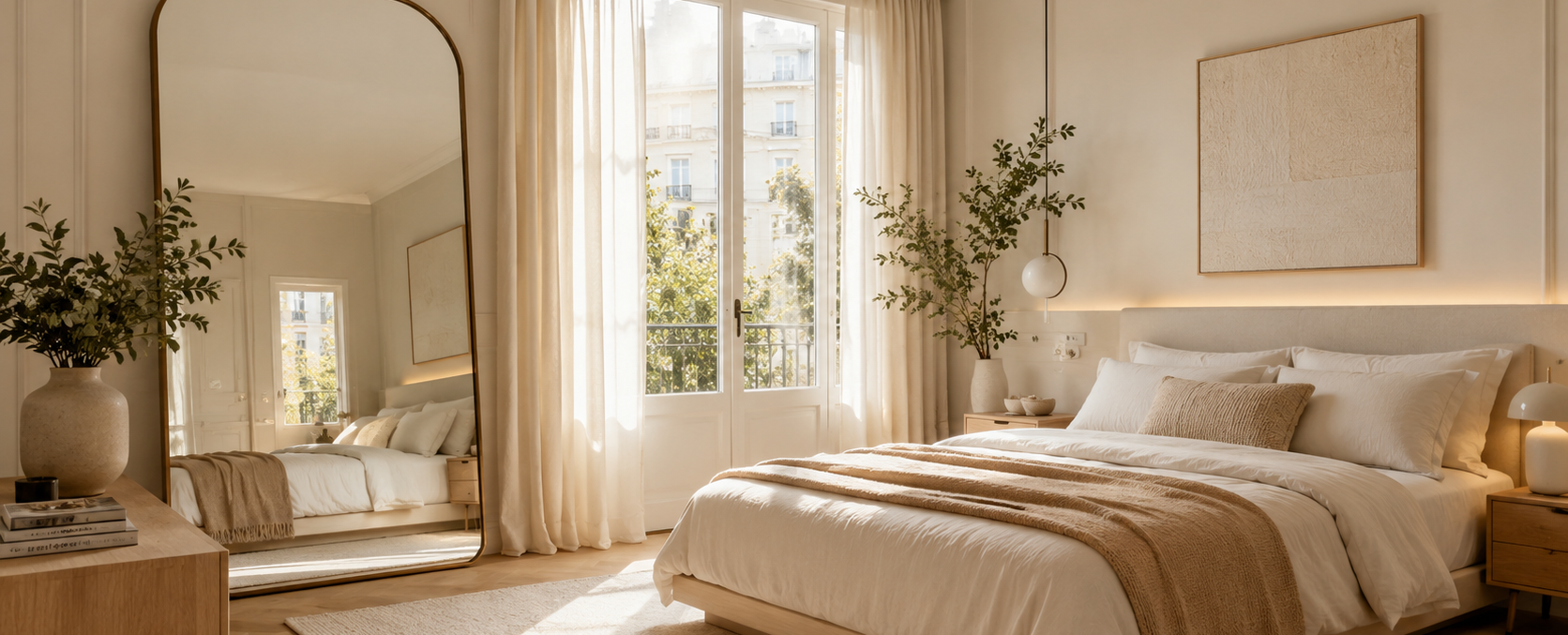
Have you ever walked into a hotel room and wondered why it feels so spacious, even though it’s not actually that large? Then you come back home, look at your own room, and somehow it feels half the size.
The truth is, making a room feel bigger isn’t always about square footage. It’s about how the space is designed, organized, and lit. Interior designers use simple tricks to create the illusion of more space, and the best part is that most of them don’t require expensive renovations.
Start by Getting Rid of Visual Clutter
Let’s begin with the simplest and most effective change: decluttering.
Even a fairly large room can feel small when it’s packed with unnecessary items. Extra furniture, piles of books, random decorations, tangled cables, and things you haven’t used in months all take up valuable visual space.
Take a good look around your room and ask yourself a simple question: “Do I actually need this here?”
You don’t have to become a minimalist overnight, but clearing out items that don’t serve a purpose can dramatically improve how spacious a room feels.
A clean room allows your eyes to move freely across the space, creating an instant feeling of openness.
Let Natural Light Do the Heavy Lifting
If you’re lucky enough to have windows, make them work for you.
Natural light is one of the easiest ways to make any room feel larger. Bright spaces naturally feel more open and welcoming, while dark rooms tend to feel smaller and more enclosed.
If your windows are covered with heavy curtains, consider switching to lighter fabrics or sheer curtains that allow sunlight to pass through.
Also, avoid placing large furniture directly in front of windows. Blocking natural light is like making your room smaller on purpose.
The more light you let in, the bigger your room will appear.
Use Mirrors to Create Instant Depth
If there were a secret weapon in interior design, mirrors would be it.
A well-placed mirror can completely transform how a room feels. Mirrors reflect both light and space, creating the illusion that the room extends farther than it actually does.
For the best results, place a large mirror opposite a window. This reflects natural light throughout the room and makes the space feel brighter and deeper.
Full-length mirrors are especially effective in bedrooms and smaller living spaces. They not only serve a practical purpose but also help create a more open atmosphere.
Choose Furniture That Does More Than One Job
When space is limited, every piece of furniture should work harder.
Think about replacing bulky, single-purpose furniture with pieces that offer extra storage or multiple functions.
For example:
- Storage ottomans can hold blankets, books, or accessories.
- Beds with built-in drawers provide hidden storage.
- Foldable desks save space when not in use.
- Nesting tables can be tucked away when needed.
The fewer individual furniture pieces you need, the less crowded the room will feel.
Stick to Light Colors
Color has a surprisingly powerful effect on how we perceive space.
Lighter shades reflect more light, making walls appear farther apart and ceilings seem higher. That’s why small rooms often benefit from whites, creams, soft grays, and light beige tones.
This doesn’t mean your room has to feel boring or plain.
You can still add personality through artwork, cushions, plants, and decorative accents while keeping the overall palette light and airy.
If repainting isn’t an option, consider introducing lighter colors through bedding, rugs, curtains, or furniture.
Think Up Instead of Out
When floor space is limited, start using your walls.
Many people forget how much storage potential exists above eye level. Floating shelves, wall-mounted organizers, and tall bookcases help maximize storage without taking up additional floor space.
There’s another benefit too.
Vertical storage naturally draws the eye upward, making ceilings appear taller and the room feel larger than it really is.
It’s one of those small design tricks that creates a surprisingly big impact.
Stop Buying Oversized Furniture
A common mistake in small rooms is trying to fit furniture designed for much larger spaces.
That oversized sofa might be comfortable, but if it dominates the room, everything else will feel squeezed in around it.
Instead, choose furniture that’s proportional to the room.
Look for slim-profile sofas, compact desks, and chairs with exposed legs. Furniture that allows you to see more floor space underneath creates a lighter, less crowded appearance.
The goal isn’t to fill every corner. It’s to create breathing room.
Use a Larger Rug
This tip sounds backward, but it works.
Many homeowners buy tiny rugs because they think small room equals small rug.
In reality, a rug that’s too small can make a room feel fragmented and cramped.
A larger rug helps unify the space and creates a sense of continuity. Ideally, the front legs of your major furniture pieces should sit on the rug.
This simple change can make the room feel significantly more cohesive and spacious.
Keep Decorations Intentional
Decorating a room is fun, but too many decorative items can quickly create visual clutter.
Instead of displaying dozens of small pieces, choose a few larger statement items that draw attention without overwhelming the room.
A large mirror, an oversized piece of artwork, or a stylish floor lamp often works better than several small decorative objects competing for attention.
When it comes to small spaces, less is usually more
Create Better Lighting Layers
Don’t rely on a single ceiling light to illuminate the entire room.
Layering different light sources creates depth and dimension, which helps a room feel larger.
Try combining:
- Ceiling lighting
- Floor lamps
- Table lamps
- Wall sconces
- Accent lighting
A well-lit room feels more inviting and visually expansive than one with harsh or uneven lighting.